
For young children, hopeful stories and visible local actions are more useful than overwhelming facts or personal guilt.
Kindness and care become meaningful when children notice a real need, understand why an action helps, and see adults sharing responsibility. The goal is not public performance or forced positivity. Small, accurate, consent-aware actions help children connect stories with everyday community life.
What to notice
Choose a character who notices a problem, works with others, and takes realistic action. Clarify that fiction opens curiosity while local facts guide action.
How to respond
Make the activity local by observing one lunch, tree, garden, water routine, or shared space.
How stories can help
Measure something children can see, such as reusable items, paper use, litter count, or a plant’s change over time.
At home or in a classroom
At home, connect the idea to one real person, object, plant, animal, or shared space. In a classroom, build consent, safety, and local accuracy into every action. Children learn most when adults participate and explain the effect of the action without turning it into a public performance.
Keep the practice brief, repeatable, and optional where possible. A useful routine should reduce pressure, provide clear boundaries, and leave the child with a next step that can actually be used.
A practical six-step plan
- Read one hopeful story.
- Observe one local detail.
- Ask what living things need.
- Choose one safe action.
- Record a before-and-after observation.
- Plan one follow-up date.
A simple activity to try
Study one square meter or one fixed view, record what is present, complete one approved care action, and return later to notice change.
Conversation prompts
- What living things share this place?
- What helps them?
- Which action could improve it?
- Who else should be part of the plan?
Keep the story enjoyable
Read for pleasure first. A child may connect with the idea during play, on a later day, or without discussing it aloud. One optional question is usually enough. Repetition is valuable because familiar characters and illustrations let children notice new details while feeling secure.
Adults can model the skill in ordinary moments and avoid using the book as proof that a child must behave in one correct way. The story is an invitation to notice, practice, and talk—not a test.
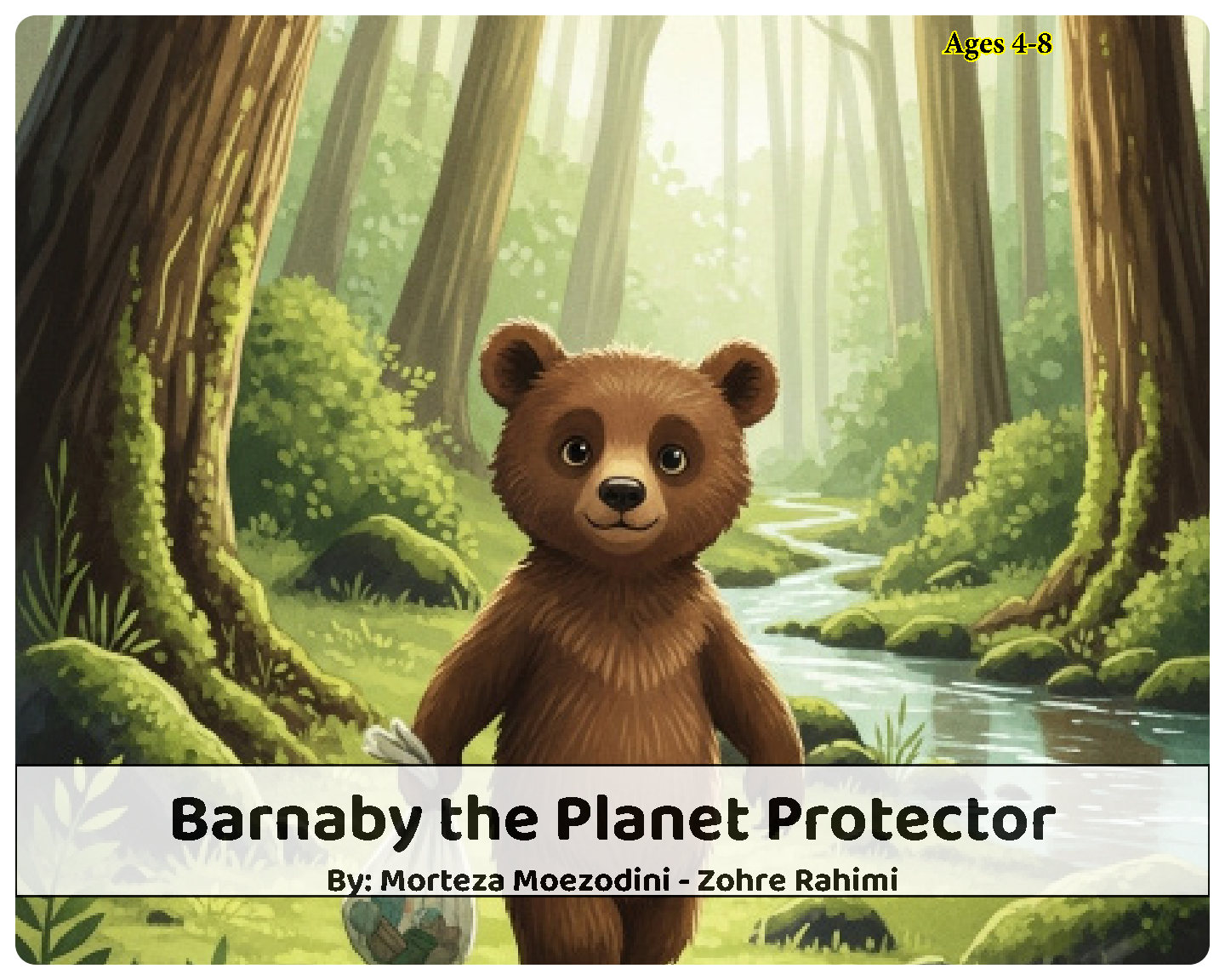
Explore Barnaby the Planet Protector
This guide is educational and is not a substitute for individualized medical, developmental, mental-health, or educational advice. Seek qualified guidance when a child’s distress or difficulty is persistent, severe, affects safety, or interferes with daily life.