
Gratitude can help children notice support, effort, beauty, and ordinary comfort while still leaving room for sadness, anger, and disappointment.
Kindness and care become meaningful when children notice a real need, understand why an action helps, and see adults sharing responsibility. The goal is not public performance or forced positivity. Small, accurate, consent-aware actions help children connect stories with everyday community life.
What to notice
Make prompts specific: who made something easier, what felt comforting, or what did the child enjoy seeing, hearing, or using?
How to respond
Include people, places, objects, and nature so gratitude is broader than gifts and public thank-you performances.
How stories can help
Never use gratitude to cancel a difficult feeling. Safety and honest connection create more genuine appreciation.
At home or in a classroom
At home, connect the idea to one real person, object, plant, animal, or shared space. In a classroom, build consent, safety, and local accuracy into every action. Children learn most when adults participate and explain the effect of the action without turning it into a public performance.
Keep the practice brief, repeatable, and optional where possible. A useful routine should reduce pressure, provide clear boundaries, and leave the child with a next step that can actually be used.
A practical six-step plan
- Use one specific prompt.
- Model gratitude with a reason.
- Allow words, drawing, or action.
- Notice ordinary support and nature.
- Leave room for hard feelings.
- Return to gratitude naturally after stories.
A simple activity to try
Create a thank-you trail for one everyday object and trace the people and resources that helped it reach the child.
Conversation prompts
- Who made something easier today?
- What small thing felt comforting?
- What did nature give us?
- How could we show appreciation naturally?
Keep the story enjoyable
Read for pleasure first. A child may connect with the idea during play, on a later day, or without discussing it aloud. One optional question is usually enough. Repetition is valuable because familiar characters and illustrations let children notice new details while feeling secure.
Adults can model the skill in ordinary moments and avoid using the book as proof that a child must behave in one correct way. The story is an invitation to notice, practice, and talk—not a test.
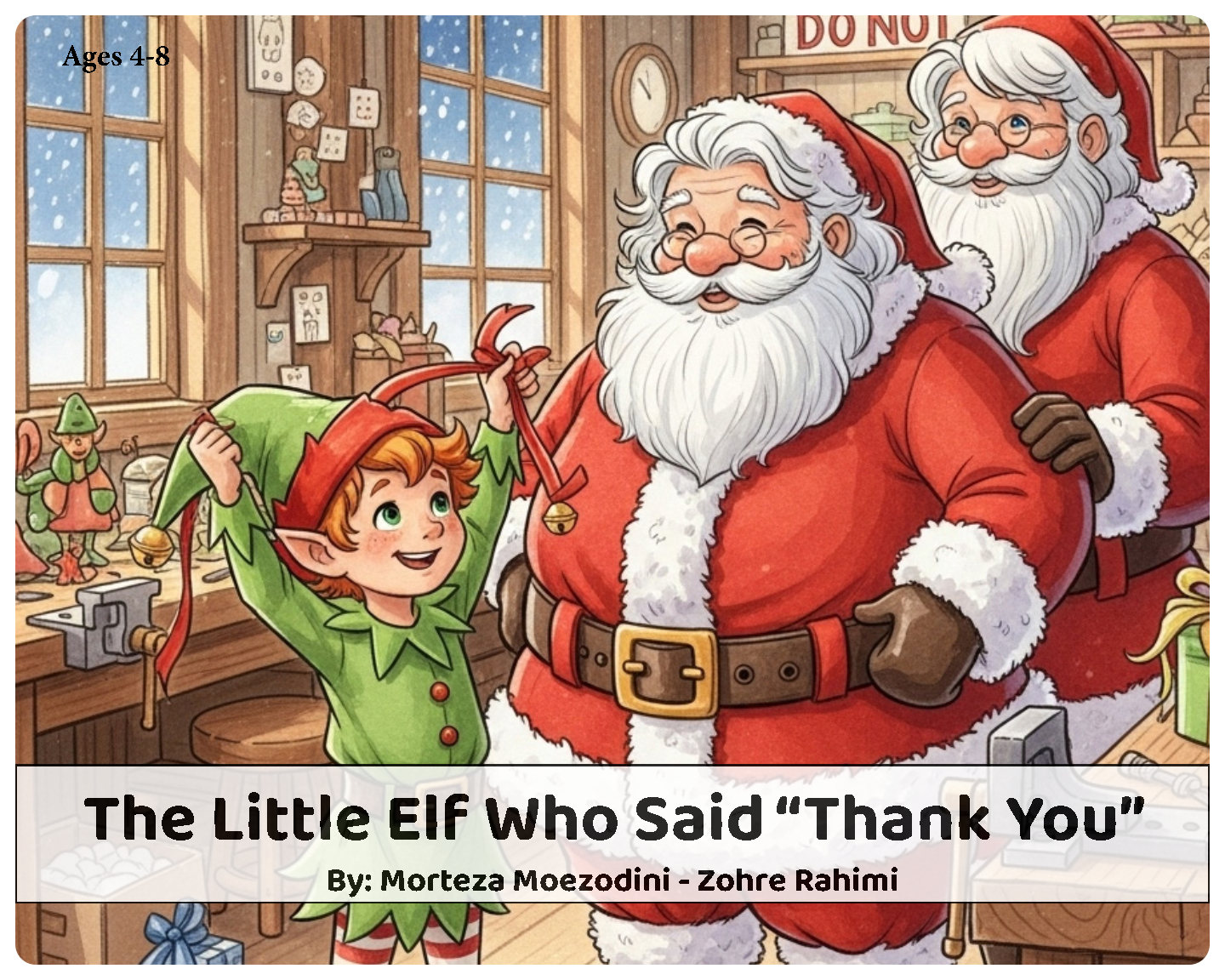
Explore The Little Elf Who Said “Thank You”
This guide is educational and is not a substitute for individualized medical, developmental, mental-health, or educational advice. Seek qualified guidance when a child’s distress or difficulty is persistent, severe, affects safety, or interferes with daily life.