
A reliable ten-minute reading window can create connection and shared memory without a perfect room or children sitting completely still.
Family and classroom reading works best when the routine is realistic, participation is flexible, and questions remain optional. Repetition, visual attention, and one simple extension can deepen a story without turning it into a test. A few well-chosen books can support connection across ordinary and seasonal moments.
What to notice
Attach reading to an existing cue such as pajamas, breakfast, quiet time, or waiting for dinner.
How to respond
Offer two or three books instead of an entire shelf and allow repetition because familiar stories deepen language and confidence.
How stories can help
Protect the ending by stopping while the routine still feels successful rather than turning attention into a test.
At home or in a classroom
At home, match the story or activity to the family’s available time and energy. In a classroom, keep the first reading smooth and save deeper questions for a second visit. Children may listen while drawing, holding a comfort object, pointing, or talking with a partner.
Keep the practice brief, repeatable, and optional where possible. A useful routine should reduce pressure, provide clear boundaries, and leave the child with a next step that can actually be used.
A practical six-step plan
- Choose one existing cue.
- Prepare a small book basket.
- Start with ten minutes.
- Allow quiet movement or a comfort object.
- Ask one optional question.
- End predictably and leave the next book visible.
A simple activity to try
Create a two-minute reading signal such as one lamp, a small basket, a sound, or the same invitation sentence.
Conversation prompts
- Which book fits our energy?
- Would you like to sit, draw, or hold a toy?
- What picture should we revisit?
- Which book belongs in tomorrow’s basket?
Keep the story enjoyable
Read for pleasure first. A child may connect with the idea during play, on a later day, or without discussing it aloud. One optional question is usually enough. Repetition is valuable because familiar characters and illustrations let children notice new details while feeling secure.
Adults can model the skill in ordinary moments and avoid using the book as proof that a child must behave in one correct way. The story is an invitation to notice, practice, and talk—not a test.
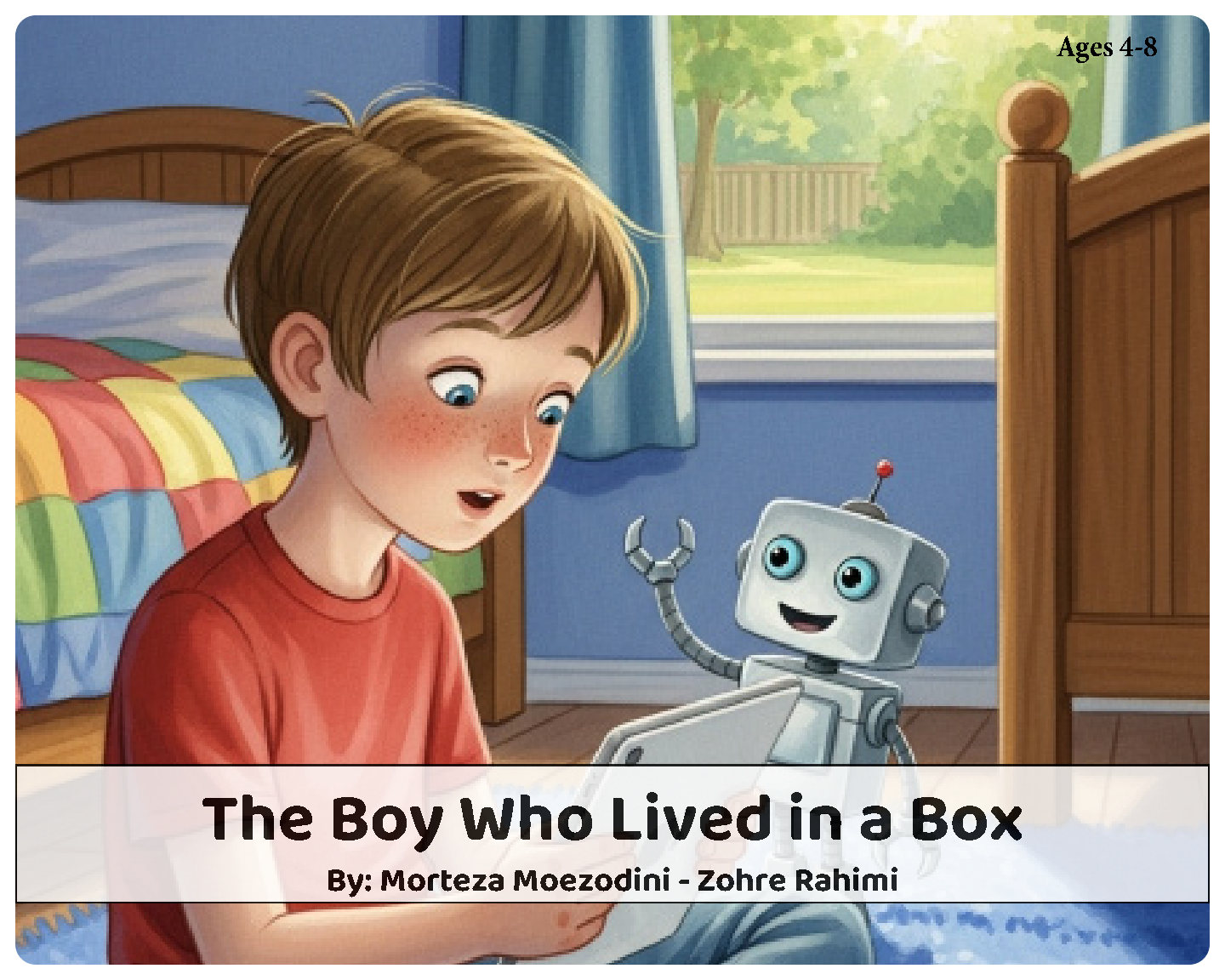
Explore The Boy Who Lived in a Box
This guide is educational and is not a substitute for individualized medical, developmental, mental-health, or educational advice. Seek qualified guidance when a child’s distress or difficulty is persistent, severe, affects safety, or interferes with daily life.