
Kavomaz Life
How to Stop Overthinking at Night
A calm, practical guide for readers whose thoughts become louder at bedtime and who want a gentler way to reduce mental noise without fighting every thought.
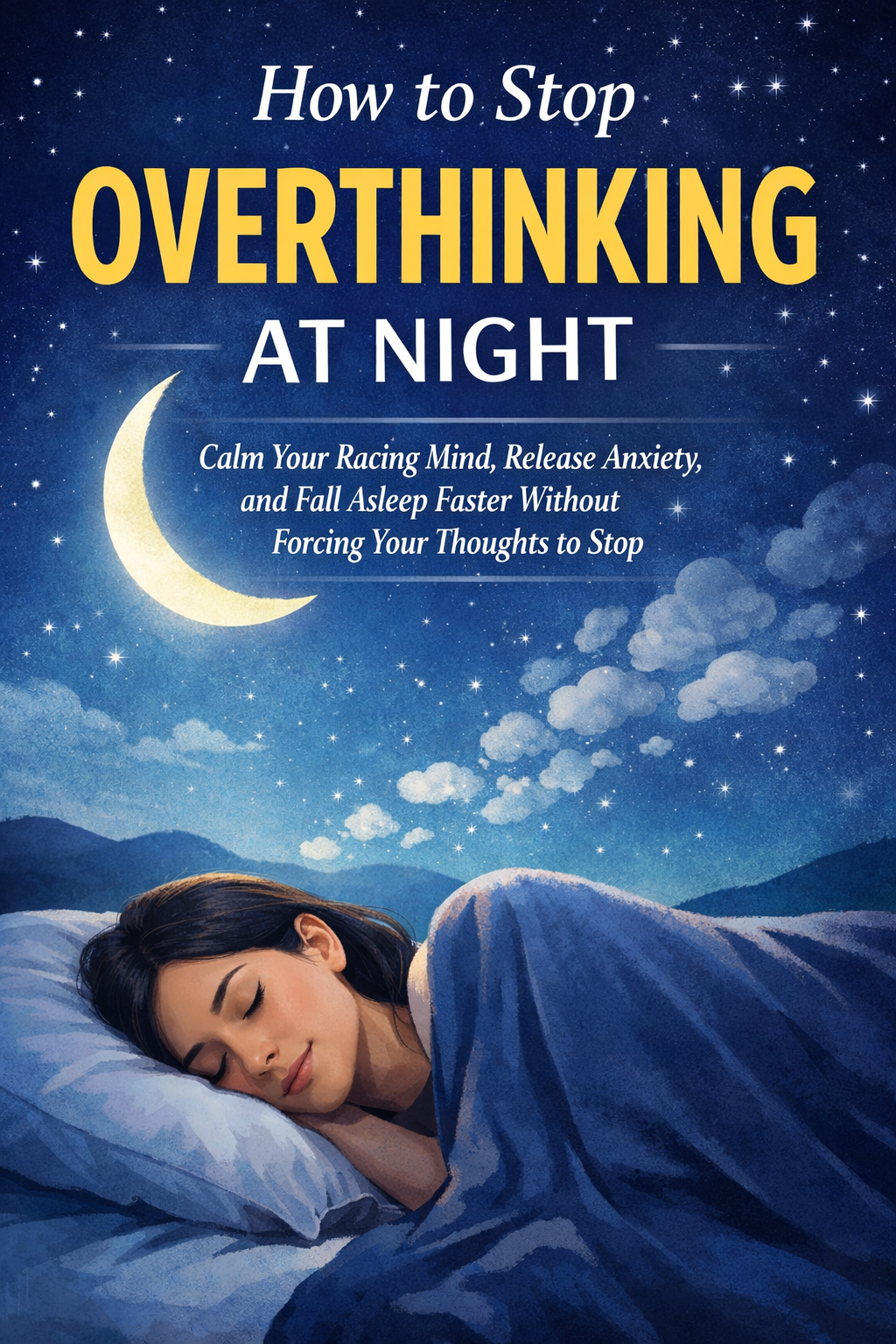
About this book
Understand the nighttime loop before trying to force it away
Nighttime overthinking can feel especially intense because the day becomes quiet while the mind continues reviewing conversations, imagining future problems, and searching for certainty. This book is for adults who want to understand that pattern without turning sleep into another performance goal.
The approach is practical and low-pressure: build a calmer transition into the evening, notice the habits that keep the loop active, and use simple prompts to step out of mental replay. Readers can move through the material gradually and choose the ideas that fit their routine.
This book is educational and is not a substitute for professional care. Persistent insomnia, severe anxiety, or symptoms affecting safety and daily functioning deserve support from a qualified professional.
Reader takeaways
What readers can explore
Use the ideas as a menu, not a test. One useful change is enough to begin.
Reduce the abrupt shift from a busy day to expected sleep by using a repeatable wind-down sequence that lowers stimulation and decision-making.
Practice noticing mental replay, labeling the loop, and redirecting attention without demanding that every thought disappear.
Use short reflection and planning prompts so unfinished concerns have a place to go before bedtime.
Related reading guides